MERLIN Support Office
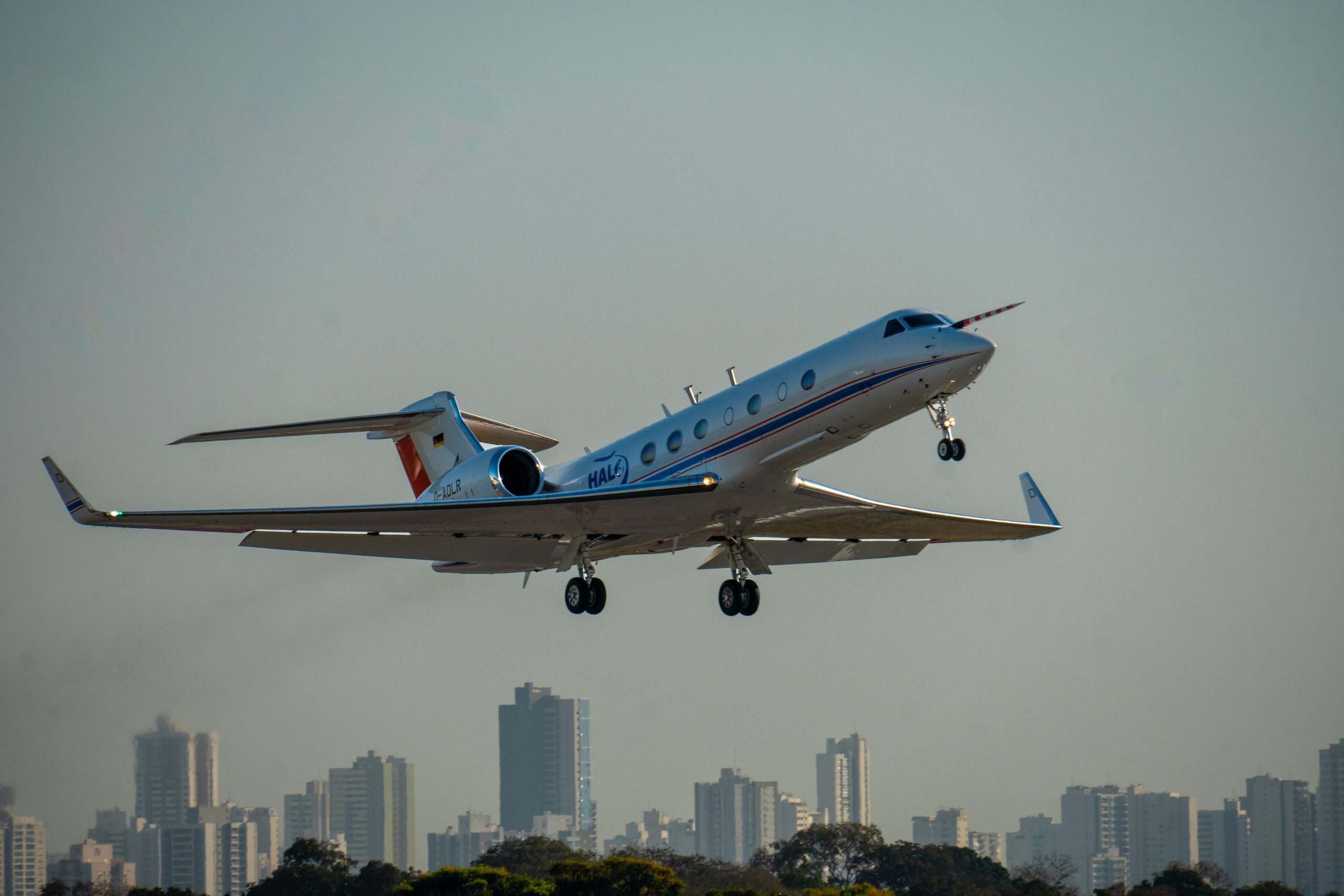
The CoMet 3.0 Tropics measurement campaign is advancing our understanding of greenhouse gas emissions across tropical South America. In summer 2026, the German Aerospace Center (DLR) research aircraft HALO conducted extensive measurement flights over Brazil and Bolivia to investigate methane (CH₄), carbon dioxide (CO₂) and other climate-relevant gases. The campaign focuses on tropical wetlands, forests, agricultural landscapes and fire-prone ecosystems, where natural processes and human activities influence the global greenhouse gas budget.
HALO’s advanced remote sensing and in-situ instruments provide valuable atmospheric measurements over regions that are difficult to monitor from the ground. These observations help researchers distinguish natural methane emissions from anthropogenic sources and improve the accuracy of greenhouse gas emission estimates.
The campaign also contributes to the development and
monitoring. CoMet 3.0 Tropics provides valuable reference data for the MERLIN (Methane Remote Sensing Lidar Mission), the joint French-German satellite mission developed by CNES and DLR. These measurements will help improve the interpretation of satellite observations, reduce uncertainties in methane budgets and strengthen our understanding of the role tropical ecosystems play in climate change.
An important part of this international research effort is BRACCIOLE (Brazilian CO₂, CH₄ and N₂O Large-Scale Experiment), an ESA-funded field campaign integrated into CoMet 3.0 Tropics. BRACCIOLE investigates the sources, sinks and atmospheric transport of carbon dioxide, methane and nitrous oxide (N₂O) across the Amazon Basin and the Pantanal wetlands. By combining airborne measurements with ground-based observations and satellite data, the project addresses critical gaps in greenhouse gas monitoring. It also examines emissions from biomass burning and human activities to improve estimates of regional greenhouse gas fluxes.
Discover how CoMet 3.0 Tropics, ESA’s BRACCIOLE project and HALO’s research flights contribute to improved methane monitoring and the scientific objectives of the MERLIN mission.
Further reading: